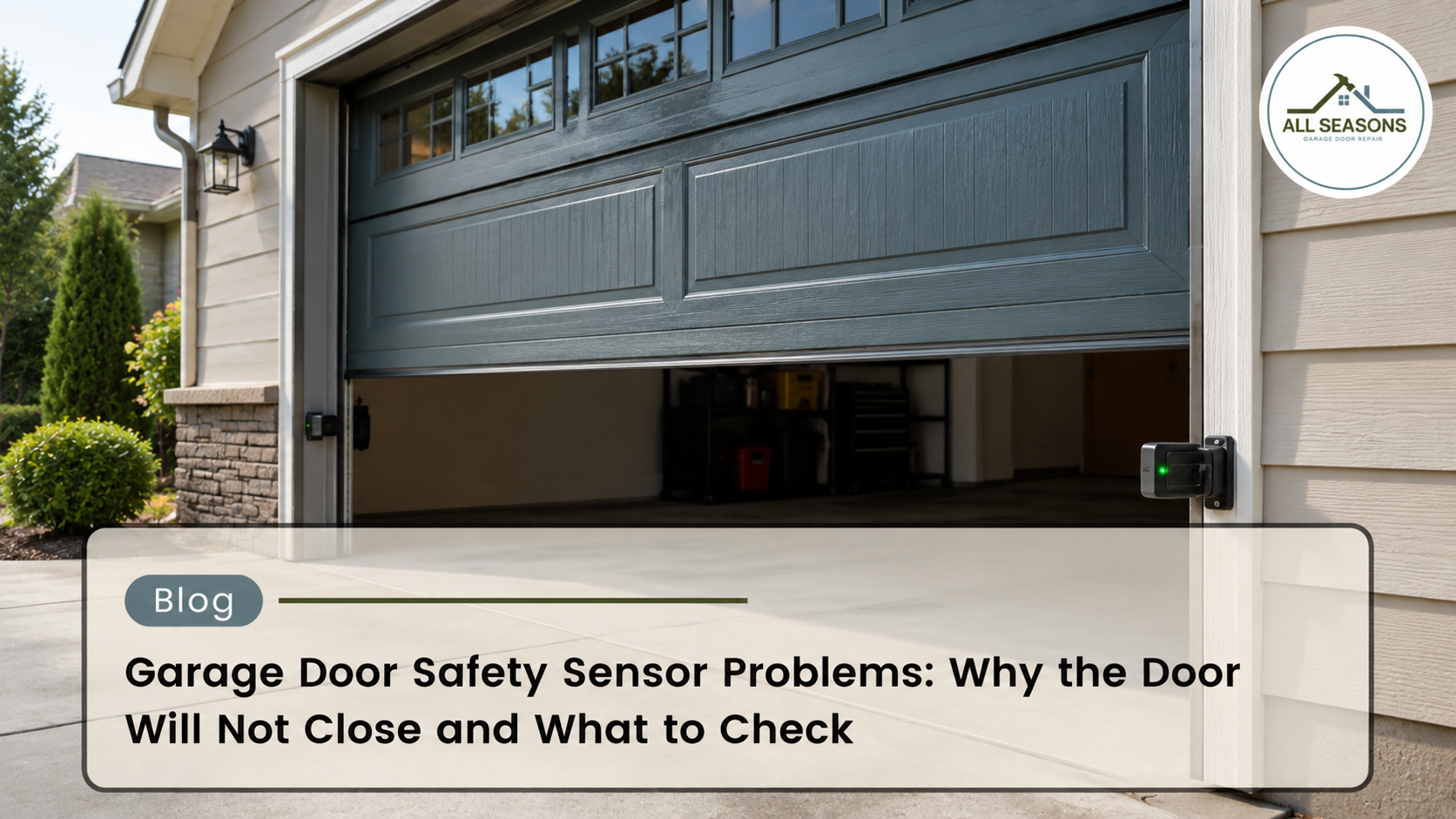
When a garage door opens normally but refuses to close, the safety sensors are one of the first components to check. These small photo eyes sit near the floor on both sides of the opening and create an invisible beam across the door path. If the beam is interrupted or the sensors cannot communicate, the opener may reverse the door or prevent normal closing.
The sensor system is designed to reduce the chance of the door closing on a person or object. A closing problem should not be solved by bypassing, raising, taping, or disconnecting the sensors. The goal is to restore reliable alignment and safe operation.
How Garage Door Photo-Eye Sensors Work
One sensor sends the beam and the other receives it. Indicator lights usually show whether each unit has power and whether the beam is aligned. The exact light pattern varies by opener brand, so the owner’s manual remains the best reference for diagnostic codes.
The sensors are mounted low because small children, pets, boxes, tools, and vehicle tires can enter the path below the main door panels. When the beam is broken during closing, a properly operating opener should stop and reverse the door.
Common Reasons the Sensors Stop the Door From Closing
Many sensor problems are simple, but the symptom can also come from damaged wiring, a loose bracket, or an opener control issue. Begin with visible conditions and avoid opening the motor housing or modifying the wiring.
- A storage bin, broom, tire, or other object is blocking the beam.
- Dust, spiderwebs, moisture, or residue is covering a sensor lens.
- A bracket was bumped and one sensor now points above or beside the other.
- Direct light is interfering with the receiving sensor at certain times of day.
- A low-voltage wire is loose, pinched, cut, or corroded near the sensor.
- The sensor lights blink or remain off even after the path is cleared.
A sensor that works only after being pushed into position is not securely aligned. Repeated adjustment may indicate a loose fastener, bent bracket, vibration, or damaged mounting surface.
Safe Checks a Homeowner Can Perform
Start by clearing the entire opening, including items that sit close to the beam without obviously crossing it. Wipe the lenses gently with a soft dry cloth. Confirm that both sensors appear to be at similar heights and face one another. Do not force a bracket or twist the sensor body if the mounting hardware is damaged.
Observe the indicator lights while lightly checking whether a sensor mount is loose. If a light changes when the wire is moved, stop and arrange service; the conductor or connection may be damaged. Low-voltage sensor wiring is different from household power, but improper repairs can still make the safety system unreliable.
Why Holding the Wall Button Is a Warning Sign
Some openers allow the door to close only while the wired wall control is held continuously when the sensor circuit has a fault. This behavior is meant as a controlled override from a position where the user can see the door. It should not become the normal way the system is operated.
If the remote and keypad will not close the door but the wall button works only when held, the sensors, wiring, or opener logic should be diagnosed. Do not place tape over the wall control or ask another person to hold it while the doorway is out of view.
Test the Reversal System After the Sensor Issue Is Corrected
Once the lights show normal alignment, run the door through a complete cycle while the opening is clear. Interrupt the beam during closing with an object that keeps you outside the door path. The door should stop and reverse. Follow the opener manufacturer’s test procedure because models can differ.
The U.S. Consumer Product Safety Commission explains that automatic residential garage door operators are subject to federal safety requirements. Review the CPSC garage door opener safety FAQ for additional context on entrapment-protection features.
When Sensor Problems Need Professional Repair
Arrange service when a sensor has no power, wiring is damaged inside the wall, brackets will not remain aligned, the opener shows an unexplained diagnostic code, or the door reverses despite a clear path. The technician should also inspect closing force, travel limits, door balance, and the condition of the opener rail.
A heavy or binding door can create closing symptoms that look like a sensor problem. Proper diagnosis prevents unnecessary sensor replacement and ensures the opener is not being used to overcome a mechanical issue.
Fix a Garage Door That Will Not Close Reliably
All Seasons Garage Door services safety sensors, opener controls, wiring concerns, and mechanical problems that interfere with closing. Contact All Seasons Garage Door for an inspection instead of bypassing a required safety feature.