Garage door rollers are small compared with the panels and tracks, but they influence nearly every opening and closing cycle. Each roller supports the edge of the door and guides it through the curved and vertical track sections. When a roller wears unevenly, binds, or develops excess play, the door may become louder, shakier, and harder for the opener to move.
Roller problems tend to develop gradually. A homeowner may first notice a faint clicking sound or a slight vibration near one hinge. Over time, the sound can become a rattle, scrape, or repeated pop. Identifying the source early can prevent damage to the tracks, hinges, and opener.
How Garage Door Rollers Support Smooth Movement
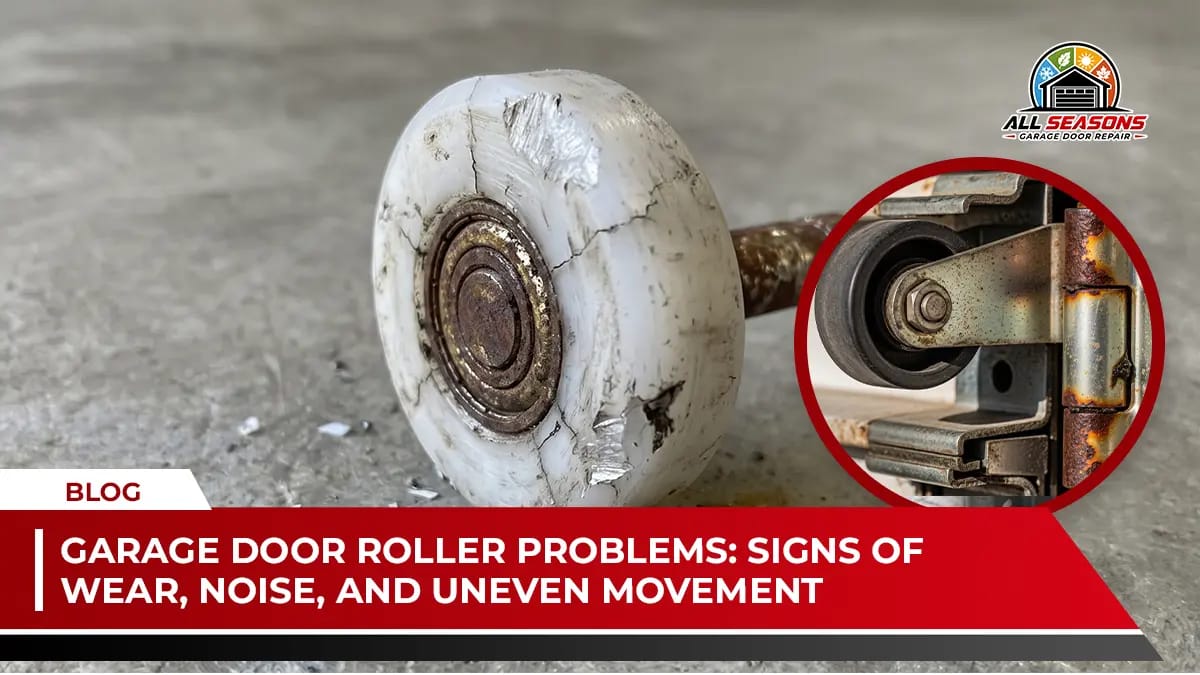
Most sectional doors use a roller at each hinge position along both sides. The wheel travels inside the track while the stem sits in a hinge or roller bracket. The roller must rotate freely and remain aligned as the door changes direction near the top of the opening.
Different doors may use nylon, steel, or specialty rollers with varying bearing designs. The correct replacement depends on the track size, stem length, door weight, and hardware layout. Installing the wrong roller can create excessive clearance, interfere with movement, or place force on a bracket that was not designed for it.
Common Signs of Worn or Damaged Rollers
Watch and listen to the door from inside the garage. Stand clear of the moving door and do not place hands near the tracks or hinges. The pattern of the noise can help distinguish a roller problem from an opener or spring issue.
- A wheel wobbles instead of rotating in a straight line.
- The door rattles or chatters while passing through the curved track.
- A roller slides through part of the track instead of turning freely.
- The wheel is chipped, cracked, flattened, or separated from its bearing.
- Dark dust, metal flakes, or unusual wear marks collect near a hinge.
- The door moves smoothly on one side but shakes on the other.
Noise alone does not prove that a roller needs replacement. Loose hinges, bent tracks, poor balance, and opener vibration can create similar sounds. A complete inspection is important because replacing rollers will not correct a track that has shifted or a spring system that is no longer supporting the door properly.
Why Worn Rollers Should Not Be Ignored
A roller that does not turn freely increases resistance. The opener must work harder, and the track may be pushed sideways as the wheel drags. A loose roller can also allow the door to move farther than intended within the track, which increases vibration and can affect the spacing between sections.
In severe cases, a damaged roller or bracket can contribute to a door leaving the track. This is more likely when the track is already bent, hardware is loose, or the door has been struck. Continuing to operate a door that jerks or leans can make the system unstable.
Can Garage Door Rollers Be Lubricated?
Some roller bearings and hinge pivot points may benefit from a garage-door lubricant recommended by the manufacturer. The track surface itself generally should remain clean rather than coated with heavy grease. Grease can collect grit and create a paste that interferes with the wheel.
Sealed nylon rollers may not have an exposed bearing that requires lubrication. Spraying every visible surface is not a substitute for replacing a cracked wheel, worn bearing, or bent stem. Product-specific instructions should guide any routine care.
Why Roller Replacement Is Not the Same on Every Hinge
Upper rollers and some center rollers can often be serviced without disturbing the counterbalance system, but bottom roller brackets are commonly connected to the lifting cables. Those brackets can remain under dangerous tension. They should not be loosened or removed by a homeowner.
The Door & Access Systems Manufacturers Association advises homeowners to leave repairs involving springs, cables, and related high-tension hardware to trained technicians. Read DASMA’s garage door safety guidance for a broader explanation of garage door system hazards.
What a Professional Roller Service Should Include
A technician should inspect more than the wheels. The service should confirm that the tracks are secure and properly spaced, hinges are not cracked, brackets are tight, and the door remains balanced. The replacement rollers should fit the existing track and door weight, and the completed door should be tested through a full cycle.
When several rollers are the same age and show similar wear, replacing them as a set may provide more consistent movement than changing only the loudest one. The condition of the remaining hardware and the cost difference should guide that decision.
Restore Smoother, Quieter Garage Door Movement
All Seasons Garage Door can diagnose rattling, scraping, vibration, and uneven movement before worn rollers damage other parts of the system. Request garage door repair or maintenance from a local team serving Bartlett and surrounding areas.